




Mizoram, often referred to as the Land of the Mizos, is one of the finest birdwatching destinations in Northeast India. Nestled along the mountain ranges that extend toward the Myanmar border, including habitats associated with the Chin Hills, Mizoram supports an exceptional diversity of birds, many of which are otherwise more commonly associated with western Myanmar. As a result, birdwatchers can observe several highly sought-after species here without crossing international borders.
Among the most notable birds found in Mizoram are the Chin Hills Wren-Babbler, Mount Victoria Babax, Spot-breasted Parrotbill, Mountain Bamboo Partridge, Crested Finchbill, Hume's Treecreeper, Spotted Laughingthrush, Great Spotted Woodpecker, Blue Pitta, and Hume's Pheasant. These species are most reliably encountered during guided birdwatching tours conducted in the spring and early summer months.
The premier birding destination in the state is the spectacular Phawngpui National Park, also known as the Blue Mountain, situated at the southernmost tip of Mizoram. Other productive birding locations include Lengpui, particularly the forests surrounding the airport, and Sailam, both of which offer excellent opportunities to observe many of the state's characteristic bird species.
The tour is to the beautiful and hardly visited Sailam WLS, Blue Mountain National Park - Phawngpui, in Mizoram. The highlight bird species from the area are - Mount Victoria Babax, Hume's Treecreeper, Chin Hills Wren Babbler, Mountain Bamboo Partridge, Flavescent Bulbul, Crested Finchbill, Assam Laughingthrush, Striped Laughingthrush, Gray Sibia, Rufous-crowned Prinia, Spot-breasted Parrotbill, Rusty-capped Fulvetta, Eyebrowed Thrush, Gray-sided Thrush, Spot-breasted Scimitar Babbler, Spot-breasted Laughingthrush, Spot-breasted Parrotbill, Buff-throated Warbler, Black-throated Parrotbill (buff-breasted ssp).
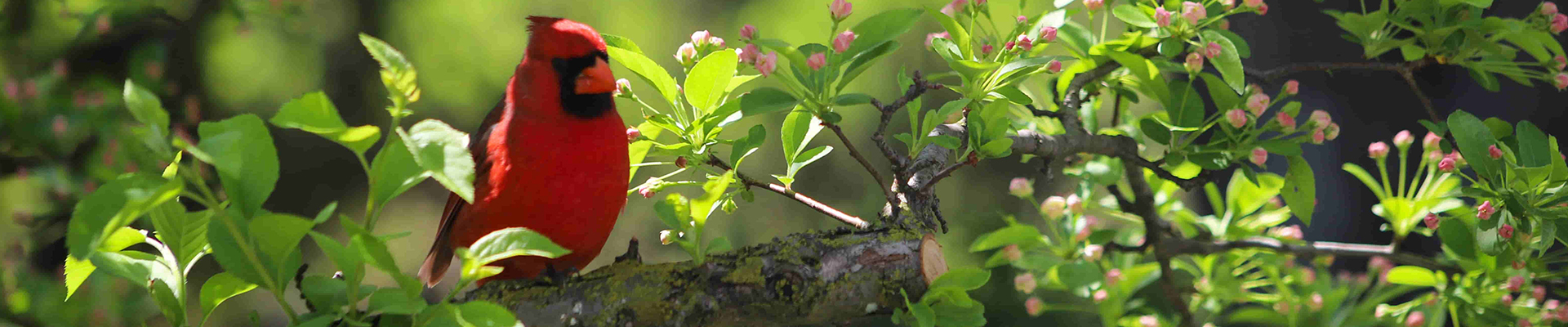


Among the highlights for visiting birdwatchers are the Chin Hills Wren-Babbler, Mount Victoria Babax, and Hume's Pheasant, which rank among the most desired species during the spring and summer seasons. With the arrival of the monsoon, the elusive and brilliantly coloured Blue Pitta becomes another exciting target species.
Mizoram is also known for its distinctive babbler fauna. Many of the babblers found here differ subtly in plumage and vocalizations from their counterparts elsewhere in Northeast India, and the state is home to several unique subspecies, reflecting its close biogeographical connection with the Indo-Burmese region.
Beyond its remarkable birdlife, Mizoram offers visitors a chance to experience the rich traditions, warm hospitality, and vibrant culture of the Mizo people, making every birdwatching expedition both a natural and cultural journey.
The ideal season for birdwatching in Mizoram extends from January through April, when weather conditions are favourable, breeding activity is high, and many of the state's specialty birds are at their most active. Join us for a professionally guided birdwatching tour and discover one of India's most rewarding yet least-explored birding destinations.
Day 1: Pick-up will be arranged from Lengpui Airport (AJL - Aizawl Airport) between 11 AM to 12 PM. We would have lunch at Aizawl Town. From there we would drive to Sailam Bird Sanctuary (a 2.5-hour drive). A short afternoon birding would be done in the evening at Sailam. Overnight at Sanctuary Lodge at Sailam.
Day 2: For the entire morning session we would do birding at Sailam. Later, post breakfast we would head for Sangau - the base for Phawngpui National Park. This would be an 8 hours drive and we would reach in the afternoon only. Overnight Stay at Sangau Village Lodge.
Day 3: In the early morning we would do birding in and around Sangau Village. Then after breakfast, we would drive to Thaltlang(the base for Phawngpui Blue Mountain National Park). The car would go to Thaltlang & we would continue birding for the rest of the morning session. till the top of Phawngpui National Park - Far Pak. This 5-kilometer stretch to-&-fro would be our birding trail for the next three days of the stay. If we hike directly, it would be 1-1.5 hrs of hike. Overnight stay at Far Pak Forest House / Tents.
Day 4 & Day 5: For the whole day we would go birding between Far Pak to Phawangpui Peak and back. Overnight stay at Far Pak Forest House / Tents.
Day 6: After early morning tea at Far Pak we would head back down to Thaltlang and have our breakfast. By 8 we would have to depart and we won't do any birding on the way. This would be an 11-hour drive. Thus we would arrive at Lengpui by evening only. Overnight stay at Lengpui Tourist Lodge.
Day 7: Early Morning Birding around Lengpui Tourist Lodge. After Breakfast head for the Airport.
We will be able to operate the tour only if there are at least 2 confirmed participants for the tour. We will host a maximum number of 3 participants in this tour.
FAQ:
Why do this tour, can't these species be found elsewhere at ease?
Most of the bird species mentioned here are endemic to Chin-Lusai Hills and Naga-Patkai Hills. A very small part of the habitat falls under the Mizoram state and the rest are in the Indo-Malayan Realm. Thus seeing and/or photographing them together is only possible if one opts for this tour.
What kind of accommodation would be arranged for this tour?
The accommodations in Sailam would be at Forest Rest House for one night. At Far Pak i.e. at the top of the Phawngpui Blue Mountain National Park, the stay arrangements would be at Forest Rest House at the top of the mountain. The FRH, in general, can accommodate four people i.e. two people per room. We keep three participants per birding tour. Thus staying in the room won't be an issue. The facility has attached toilets adjacent to the rooms.
If there is hiking involved, how much would it be?
From Thaltlang village to the top of the hill at Phawngpui NP - Far Pak, the distance is 5 kilometers. Here no motaroable road goes. These would be the major birding areas for us and we would regularly do birding in this stretch. Thus we would walk in mountain terrain for three full days, where hiking would be involved and on average 4-5 kilometers of walking would be involved. However, we would stay for those three nights at a single location only.
Will there be a car for the birding?
The car would be there from Aizawl Airport till we arrive at Thaltlang (till day 3) and again when we arrive back at Thatlang village (Day 6) and back to the Airport. For three full days, there won't be any cars with us.
Will there be porters while doing birding?
Yes, porters would carry luggage from Thaltlang to Far Pak leg and back to Thaltlang from Far Pak. Participants are requested not to put on unnecessary clothing and stuff. Keep it a bare minimum of 10-12 kilos per person. While doing full-day birding, participants are suggested to keep the backpack light. They should be equipped with water bottles, camera batteries, spare memory cards, personal medicines, and essential stuff only. For full-day birding, there won't be any porters required.
November to March is considered the best time for Namdapha and Walong. However, in some years, due to early monsoon, it disrupts the roads in Namdapha. Thus, to be on the safer side, you plan for this trip in February.
From Tibetan Plateau birds to Terai foothills Hornbills; mixed montane forests coppice - this tiny state has little bit of everything squeezed in it!
© 2026 Sierra Birds. All Rights Reserved. Website developed by ACCENDITORE SOFTWARE PVT LTD.